
01
Starting from what exists
At Jaspall Swiss, the tangible is not merely a category of assets. It is first and foremost a way of considering wealth.
We live in a world where a growing share of value is represented by figures, accounting entries and digital data. These tools are essential to the modern economy, but they remain representations.
The tangible brings us back to a more elementary reality: something exists independently of the way we represent it.
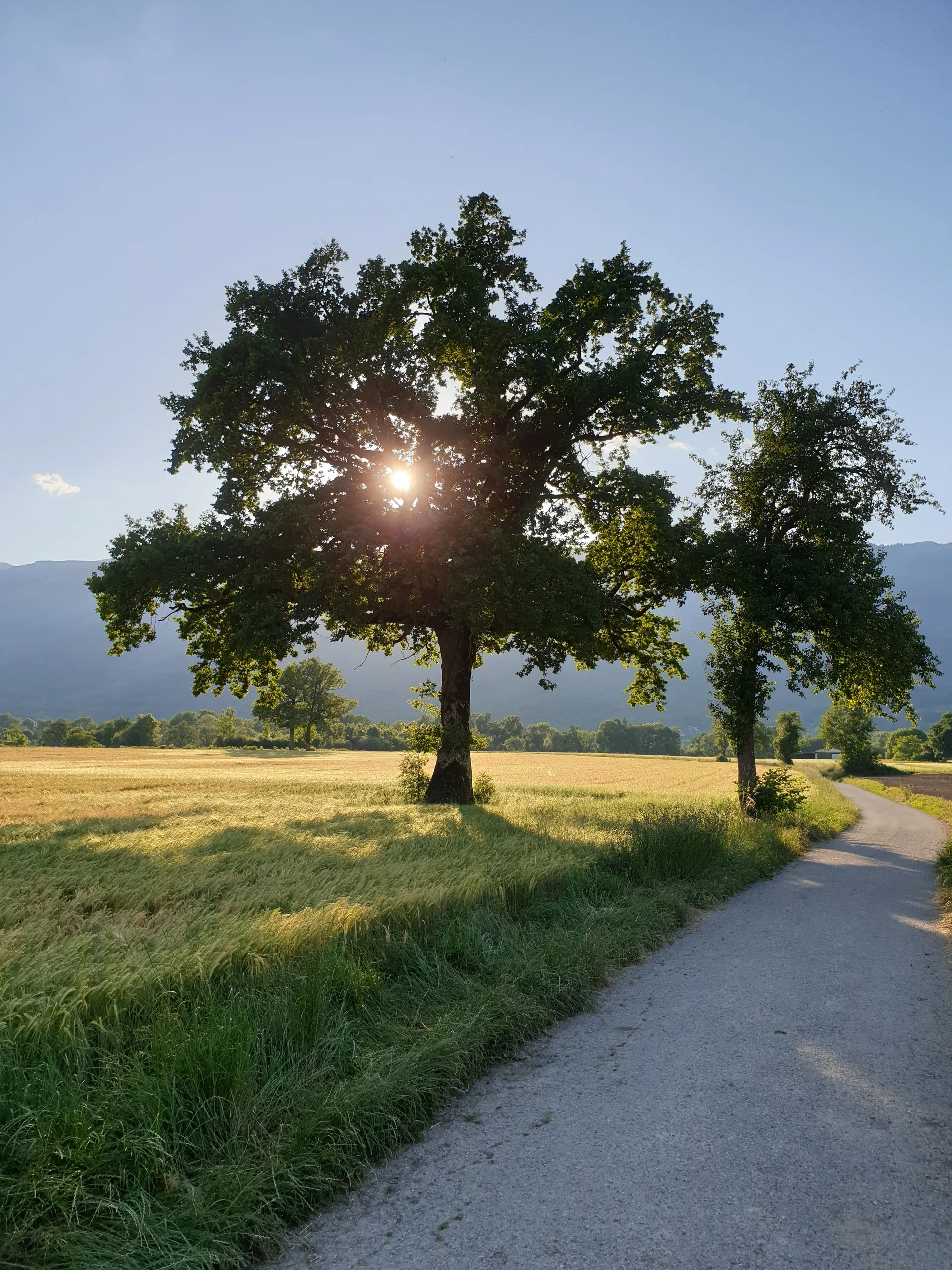
In the field of agroforestry, this reality can take the form of a tree. It occupies space, grows, transforms and passes through time. Behind the contracts, documents and data that allow it to be identified, a physical reality remains.
Its reality does not depend solely on a financial entry or on data recorded in a computer system.
02
What endures
Systems change. Technologies evolve. Currencies, institutions and the ways of recording value transform with each era.
Material goods have also always accompanied human societies: land, trees, buildings, works of art or objects passed down from generation to generation.
This does not mean that a tangible asset is immutable or free from risk. A material good can deteriorate, be destroyed or lose part, or even all, of its economic value.
Its particularity is different: its reality does not depend solely on a financial entry or on data recorded in a computer system. It also belongs to the physical world.
It is this distinction that interests us.
03
Wealth rooted in the real
There is also a deeply human dimension in our relationship to wealth.
Cultural heritage takes on its full meaning when it can be seen, heard, walked through or felt. In the same way, material wealth has this particular capacity to confront us with reality: it occupies a place, possesses matter and carries the traces of time.
A tree is perhaps one of its simplest expressions.
It is born, grows and evolves. Its potential value may change over the course of its existence, but its presence is never reduced to a line in an account or to a number displayed on a screen.
Certain forms of wealth are built before they are measured.
04
Time as a dimension
Choosing the tangible also means accepting time.
In agroforestry, it cannot be accelerated by an administrative decision or by a computer operation. Biological growth imposes its own rhythm.
This temporality recalls an often-forgotten evidence: certain forms of wealth are built before they are measured.
That is why our approach does not consist in presenting the tangible as a promise of future value. It consists in starting from a concrete, identifiable reality that can be documented.
05
Our first principle
Before ownership, there must necessarily be existence.
Before traceability, there must be something that can be identified.
And before speaking of value, management or transmission, we want to be able to speak of something that truly exists.
This is why the tangible constitutes the first pillar of the Jaspall Swiss philosophy.