01
Possession is not enough
Ownership has accompanied the history of human societies since their origins. Land, harvests, homes, tools, livestock, works of art or businesses: as soon as a society organises the possession of goods, a fundamental question appears:
what makes something truly ours?
The answer first seems obvious. We might think that it is enough to materially possess something in order to own it.
Yet possession and ownership are not synonymous.
One can hold an asset without being its owner. Conversely, one can own an asset without physically holding it.
Ownership is therefore not based solely on the relationship between a person and a thing. It also requires that this relationship be recognised and protected by a legal order capable of establishing its rights and limits.
Ownership exists fully only when a society recognises the link between an asset and the person who may legitimately exercise rights over it.
02
From possession to right
Across eras and civilisations, forms of ownership have varied considerably.
Some resources have been held collectively. Others have been allocated to families, communities or individuals. Land itself may have belonged to a sovereign, a community, an institution or private owners depending on political and legal systems.
But behind this diversity remains a constant: ownership exists fully only when a society recognises the link between an asset and the person who may legitimately exercise rights over it.
Today, this recognition notably takes the form of laws, registers, titles, contracts and institutions charged with making these rights enforceable against third parties.
A title is therefore not ownership itself. It is one of its expressions and, depending on the nature of the asset and the applicable law, one of the means of establishing or protecting its existence.
03
Individual ownership and collective ownership
Ownership is not necessarily individual.
An asset may belong to one person, to several people jointly, to a company, to a community or to another legal structure.
Collective ownership makes it possible to bring together several interests around the same estate. It is indispensable in many areas of the economy.
Individual ownership follows a different logic: it seeks to establish as clearly as possible the link between a determined owner and a determined asset or right.
Neither of these forms is naturally superior to the other. They serve different objectives.
For Jaspall Swiss, the essential question is therefore less whether ownership is individual or collective than whether we can answer three questions clearly:
What is the asset or right concerned?
Who owns it?
What rights and obligations does this ownership confer?
04
To own is to hold rights
Ownership is not an indivisible concept in all its manifestations.
It may include several prerogatives: using an asset, receiving its fruits or income, deciding its destination, selling it or transferring it, within the limits provided by the applicable law.
This is notably what makes it possible to distinguish bare ownership from usufruct.
Bare ownership corresponds to ownership of an asset whose certain powers of use and enjoyment have been assigned to another person.
Usufruct allows one to enjoy an asset belonging to another and to receive its fruits under the conditions governing that right.
The same asset can therefore reveal several distinct rights.
A person may hold bare ownership of an asset without receiving its fruits during the period of usufruct. Another may benefit from usufruct without owning the asset itself.
When these prerogatives are reunited in the hands of the same holder, that holder then has full ownership, naturally subject to the limits provided by law and to any rights of third parties.
Ownership gives rights precisely because it exists within a system that also recognises duties and limits.
05
A right also implies obligations
Being an owner does not mean having absolute power over a thing.
All ownership exists within a legal, social and sometimes environmental context.
Depending on the nature of the asset and the country concerned, holding it may create obligations: maintenance, taxation, compliance with planning rules, environmental protection, third-party rights or particular restrictions on use.
In certain circumstances and depending on legislation, the public interest may also justify limitations on the right of ownership, or even expropriation according to a procedure and conditions provided by applicable law.
This dimension is fundamental:
ownership gives rights precisely because it exists within a system that also recognises duties and limits.
06
Owning an asset or owning a right
In the modern economy, the word “ownership” covers very different realities.
When we hold a bond issued by a company, we own the corresponding security or right. We do not, however, become owners of that company’s buildings, machines or other assets.
Our wealth then consists essentially of a claim whose value and repayment depend notably on the issuer’s ability to honour its commitments.
Similarly, the money recorded in a bank account belongs to us in everyday language, but the legal relationship with the bank is generally based on a claim corresponding to the sums deposited. We hold a right against an institution which itself operates within a financial and regulatory system.
Conversely, directly holding an asset means that the right of ownership bears on the asset itself, subject to the legal rules that govern it.
This distinction does not mean that one form of holding is systematically preferable to another. Financial securities, claims, shareholdings in companies and direct ownership serve different functions.
But knowing what one really owns remains essential.
07
Ownership of a tangible asset
This question takes on a particular dimension when it meets our first principle: the tangible.
If the asset exists physically, the next question naturally becomes:
what right does one really hold over this asset?
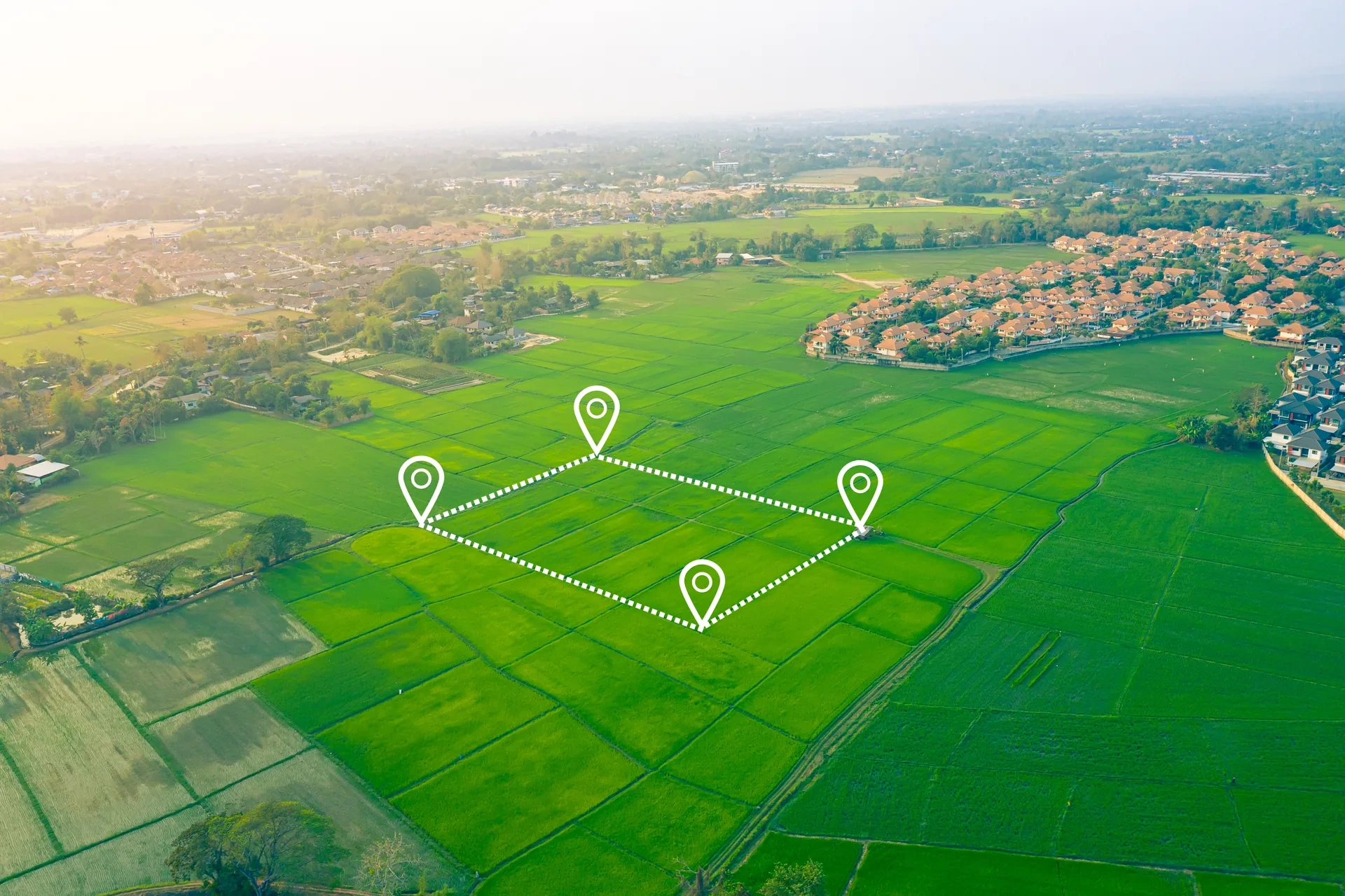
In the agroforestry field, it is particularly necessary to distinguish ownership of the land, ownership or rights relating to the trees, operating rights, the fruits derived from these assets and the responsibilities linked to their management.
Owning a tree does not necessarily mean owning the land on which it grows.
Conversely, owning land does not necessarily mean having unrestricted rights over everything located on it.
Contracts, titles, local law and the legal organisation of the operation make it possible to determine precisely the nature of the rights concerned.
This is why Jaspall Swiss attaches particular importance to the clarity of these relationships.
If all the representations surrounding my wealth disappeared, what right would remain to me over something real?
08
Knowing what one owns
Direct ownership has a fundamental characteristic: it seeks to reduce the distance between the holder of the right and the asset on which that right bears.
This removes neither risk, nor obligations, nor the need for competent management.
But it makes it possible to ask a simple and essential question:
if all the representations surrounding my wealth disappeared, what right would remain to me over something real?
After the tangible, ownership thus constitutes the second pillar of our philosophy.
The first establishes that an asset exists.
The second seeks to establish to whom it belongs, in what form and with what rights.
And this ownership only truly makes sense over time if we can then preserve its history, identification and proof.
This is where our third principle comes in: traceability.